Are Home Fire Sprinklers Worth It?
For most homeowners, yes. According to the National Fire Protection Association, the risk of dying in a reported home fire is roughly 85 percent lower in homes protected by fire sprinklers. Only the sprinkler closest to the fire activates, which usually controls the fire in the room where it started, and many insurers offer premium discounts. Installing during new construction is generally the most cost-effective route.
Key Takeaways
- Big life safety benefit: NFPA data show roughly 85 percent lower risk of dying in a reported home fire when sprinklers are present.
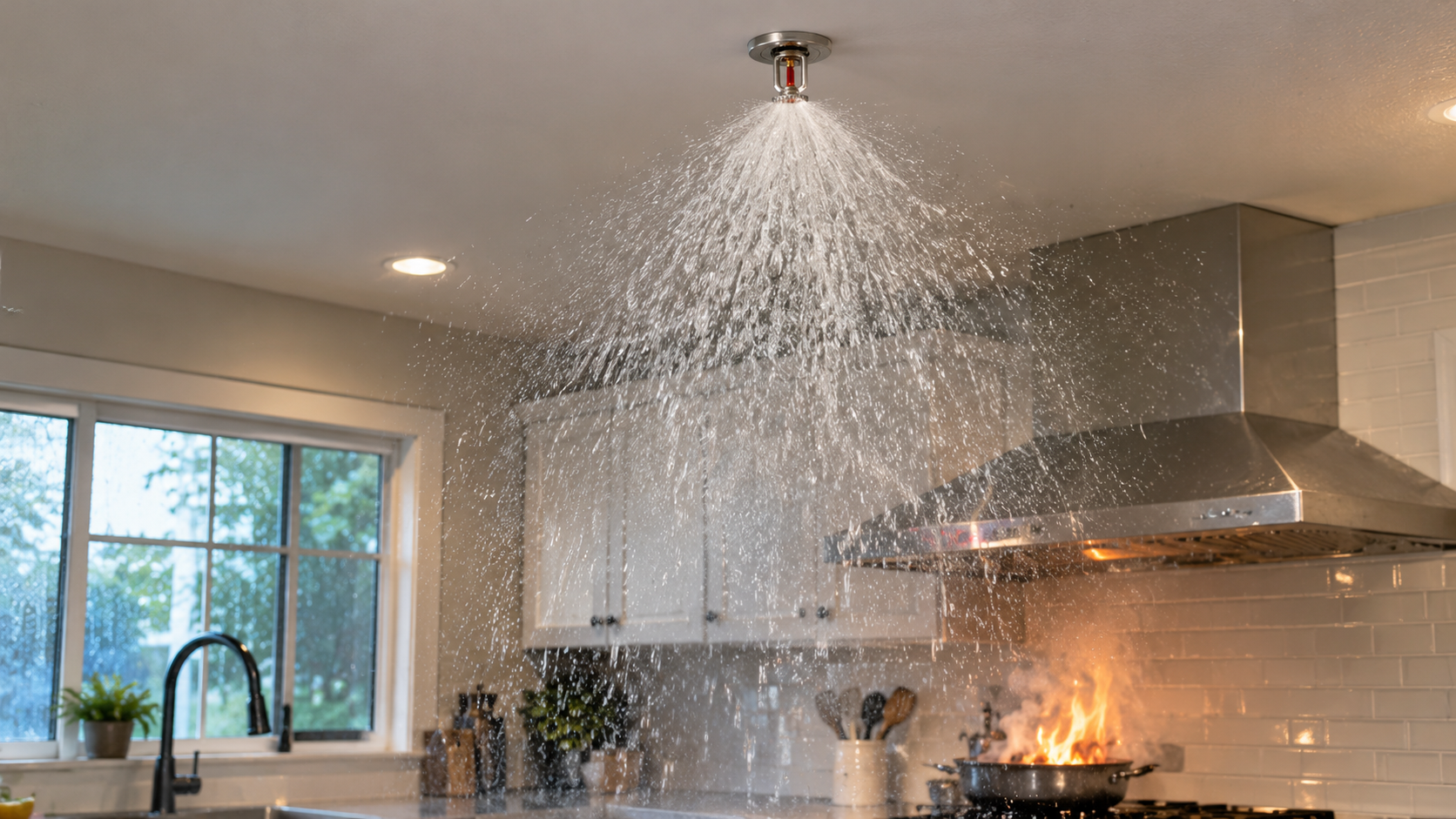
- Only one head activates: Each sprinkler is heat-activated on its own, so a burnt piece of toast will not soak the whole house.
- Smoke alarms warn, sprinklers act: Alarms alert you to a fire, but only sprinklers help control it.
- Less property loss: Sprinklers usually hold a fire to the room of origin and use far less water than a fire hose.
- Cost depends on timing: New construction is generally much more cost-effective than a retrofit.
- Possible insurance savings: Many carriers offer discounts, though the amount depends on your provider and policy.
- Low maintenance: Routine inspections, clear and unpainted heads, and open control valves are generally all it takes.
Home fire sprinklers are one of the most researched, and most misunderstood, home safety features available today. Some homeowners picture every sprinkler in the house going off at once, soaking the whole home over a burnt piece of toast. The reality, backed by decades of fire data, tells a very different story. Here is what to actually weigh when deciding whether
residential fire sprinklers
are worth it for your home.
How Home Fire Sprinklers Work
Each sprinkler head in a home system is individually heat-activated. A solder link melts or a liquid-filled glass bulb shatters once the temperature directly above it, usually around 135 to 165 degrees, is reached. Only the sprinkler closest to the fire activates, spraying water directly onto the source of heat. Smoke, steam, and cooking vapors will not set one off.
Because the system is always filled and ready, it does not rely on anyone noticing the fire or making a call. It begins working the moment enough heat reaches the sprinkler, which can be while you are asleep, away from the room, or out of the house entirely.
The Life Safety Case for Home Fire Sprinklers
The core argument for home fire sprinklers comes down to time. A residential fire can reach flashover, the point where an entire room becomes engulfed, in just a few minutes. Sprinklers are designed to respond during that narrow window, before a small fire becomes an unsurvivable one.
Did you know?
According to the National Fire Protection Association, the risk of dying in a reported home fire is roughly 85 percent lower in homes protected by fire sprinklers compared to homes without them.
That extra time matters for everyone, but especially for children, older adults, and anyone with limited mobility who may need more time to get out. It also gives firefighters safer conditions when they arrive.
The Financial Case: Property Damage and Insurance
Beyond life safety, sprinklers change the financial outcome of a home fire. Because a single sprinkler typically controls a fire before it spreads beyond the room of origin, average property loss in sprinklered homes is dramatically lower than in homes without protection. Many insurance carriers also offer premium discounts for homes with an installed fire sprinkler system, which can help offset the upfront investment over time.
A fire that is held to one room can mean repairing a kitchen instead of rebuilding a house, and keeping family keepsakes, documents, and belongings that would otherwise be lost to flames, heat, and smoke. It can also mean far less time living away from home during repairs. If you are considering a system, ask your insurance agent directly what discount your carrier offers, since it varies by provider and policy.
What Home Fire Sprinklers Cost
Cost varies based on home size, layout, and whether the system is being installed during new construction or added to an existing home. Installing sprinklers during new construction, when piping can be run before walls are closed in, is generally far more cost-effective than a retrofit. Because every home is different, the most accurate way to understand your cost is a direct consultation and quote.
What Affects the Price
- Home size and layout: Larger or more complex floor plans need more piping and more sprinkler heads.
- New build or retrofit: Open walls and ceilings make installation simpler and less expensive.
- Water supply: Homes on a municipal supply with good pressure are typically simpler than those that need a tank or pump.
- Local requirements: Some jurisdictions have specific rules for residential systems that affect design and permitting.
Common Myths About Home Fire Sprinklers
- Myth: All sprinklers go off at once. In reality, only the individual head nearest the heat activates.
- Myth: Sprinklers cause more water damage than the fire itself. In practice, sprinklers use a fraction of the water a fire hose would, and property loss is far lower overall.
- Myth: Smoke alarms alone are enough. Smoke alarms warn occupants a fire is happening, but they do not do anything to control it, which is where a fire sprinkler system comes in.
What a Home Fire Sprinkler System Looks Like
Many homeowners expect a home sprinkler system to look like the exposed pipes found in an office or warehouse. In a typical home, the piping is concealed behind walls and ceilings, and the sprinkler heads are small and often sit nearly flush with the ceiling. Some can be fitted with decorative covers that blend in with the room.
Residential systems are commonly installed with approved plastic or copper piping and connected to the home’s domestic water supply, which is one reason they can be more affordable than commercial systems. In areas that see freezing temperatures, piping in unheated spaces such as attics or crawl spaces needs to be designed with freeze protection in mind.
Understanding Home Sprinkler Standards: NFPA 13D and 13R
Residential sprinkler systems are designed to specific national standards. NFPA 13D covers one- and two-family homes and focuses on protecting lives in an affordable, residential-scale system. NFPA 13R covers low-rise residential buildings, such as apartment buildings up to four stories. Working with a licensed fire protection contractor helps ensure your system is designed to the right standard and meets local requirements.
Who Should Especially Consider Home Fire Sprinklers?
- Families building a new home: Installation is easiest and most cost-effective before walls are closed in.
- Households with young children or older adults: Extra response time can make a major difference in a fire.
- Homes with multiple stories or finished basements: Longer escape routes make early control more valuable.
- Homes farther from a fire station: Longer response times mean the home has to protect itself for longer.
- Owners planning to age in place: Sprinklers add a layer of protection that does not depend on how quickly someone can evacuate.
Maintaining Your Home Fire Sprinkler System
A home fire sprinkler system needs minimal but consistent care to stay ready. Schedule regular inspections, never paint or hang anything from a sprinkler head, keep furniture and shelving at least 18 inches below sprinklers, and always keep control valves in the open position.
Questions to Ask Before You Install
- Is my home being built or remodeled in a way that makes installation easier?
- Does my water supply have enough pressure and flow, or will a tank or pump be needed?
- What does my local jurisdiction require for permits and inspections?
- What discount might my insurance carrier offer for a sprinklered home?
- Is the contractor licensed, experienced with residential systems, and familiar with NFPA 13D?
Is It Worth It?
When you weigh the dramatically lower risk of dying in a home fire against a modest, one-time investment, most fire protection professionals and national fire safety data point to the same conclusion: home fire sprinklers are worth it. If you are building a new home or considering adding protection to your current one, contact C&E Fire Protection to discuss your options.
Frequently Asked Questions
Do all home fire sprinklers activate at once?
No. Each head is heat-activated on its own, so only the sprinkler closest to the fire turns on.
How much do home fire sprinklers cost to install?
It depends on home size and whether you install during new construction or retrofit. New construction is usually cheaper.
Do home fire sprinklers cause water damage if they malfunction?
Rarely. Accidental activations are uncommon, and sprinklers use far less water than a fire hose.
Is homeowners insurance cheaper with fire sprinklers?
Often, yes. Many insurers offer discounts, but the amount depends on your carrier and policy.
What is NFPA 13D?
It is the national standard for sprinkler systems in one- and two-family homes, focused on affordable life-safety protection.
Can I install fire sprinklers in an existing home?
Yes. Retrofits are possible, but they usually cost more and take more work than new construction.
Do home fire sprinklers require a lot of maintenance?
No. Routine inspections, clear and unpainted heads, and open control valves are usually enough.