What Happens During a Commercial Building Fire?
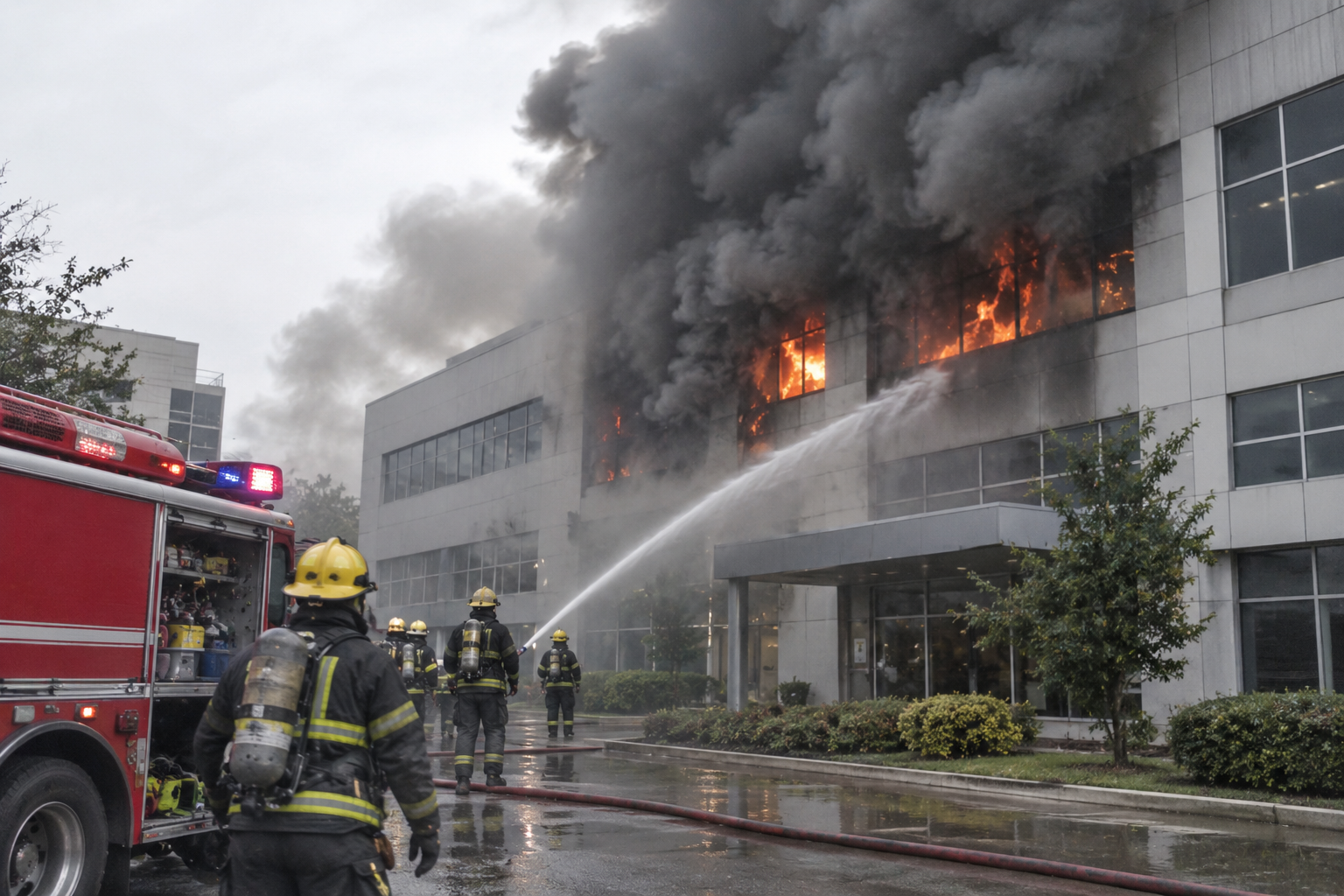
A commercial building fire moves through four stages: ignition, growth, flashover, and decay. It can double in size every 30 to 60 seconds and reach flashover in as little as three to five minutes. Automatic fire sprinklers are built to respond during the growth stage, before flashover, which is why they are the most dependable way to keep a fire small.
Key Takeaways
- Four stages: Every structure fire moves through ignition, growth, flashover, and decay, and the window to act shrinks at each stage.
- Speed is the real danger: A commercial fire can double in size every 30 to 60 seconds, leaving very little time to evacuate.
- Flashover changes everything: Once a room flashes over, survival inside it is no longer possible without protective equipment.
- Damage goes beyond the flames: Heat weakens structural steel, and smoke and firefighting water often affect a much larger area than the fire itself.
- Sprinklers act early: Only the sprinkler head closest to the heat activates, so most commercial fires are contained to the room where they started.
- Know your evacuation steps: Pull the alarm, call 911, use the nearest marked exit, never use elevators, and do not re-enter until the fire department says it is safe.
A commercial building fire rarely stays small for long. What begins as a spark near a break room outlet or a stack of stored inventory can grow into a structure-wide emergency in a matter of minutes. Understanding how a fire actually develops, from the first flame to full structural involvement, helps building owners and facility managers see why
commercial fire protection is not just a code requirement. It is the difference between a contained incident and a total loss.
The Four Stages of a Commercial Building Fire
Fire investigators generally break a structure fire into four stages. Each stage narrows the window in which people can safely evacuate and property can be saved.
1. Ignition
A heat source meets fuel, whether that is faulty wiring, an overloaded outlet, a cooking appliance, or improperly stored combustible materials. At this point the fire is small, often no larger than a wastebasket, and is usually the easiest stage to extinguish with a portable fire extinguisher.
2. Growth
Flames spread to nearby fuel sources. Heat rises and collects at the ceiling, smoke banks downward, and the temperature in the room climbs rapidly. This is the stage where early detection, whether from a smoke alarm, a monitored fire alarm panel, or an activated sprinkler head, has the greatest chance of limiting damage.
3. Flashover
If the fire is not controlled during the growth stage, every combustible surface in the room can reach its ignition temperature at nearly the same moment. The room effectively becomes fully involved in flame. Flashover is widely considered the point at which survival inside the room of origin is no longer possible without protective equipment.
4. Decay
Once the available fuel or oxygen is used up, or once suppression systems and firefighters intervene, the fire begins to lose intensity. Smoldering, heat, and smoke damage can continue well beyond this point, even after visible flames are gone.
Common Causes of Commercial Building Fires
Most commercial fires start from ordinary, preventable conditions rather than dramatic events. Knowing where fires tend to begin helps facility managers focus their prevention efforts on the right places.
- Electrical problems: Faulty or aging wiring, overloaded outlets, damaged cords, and overworked extension cords or power strips can all provide the heat source a fire needs.
- Cooking equipment: Restaurants, break rooms, and commercial kitchens introduce open heat, grease, and cooking oils into the building every day.
- Heating equipment: Space heaters, furnaces, and boilers placed too close to combustibles or left without regular servicing are a common ignition source.
- Improper storage: Stacked cardboard, pallets, packaging, and inventory placed too close to heat sources or too close to sprinkler heads make a small fire grow faster.
- Smoking materials and hot work: Discarded smoking materials, welding, and cutting operations can ignite nearby combustibles if proper precautions are not taken.
Good housekeeping, scheduled equipment maintenance, and clear storage practices cut down the number of ignition opportunities. They do not eliminate the risk, which is why a working fire protection system is still essential.
How Fast Can a Commercial Fire Spread?
Did you know? Research shows that a commercial fire can double in size every 30 to 60 seconds, depending on the fuel source, ventilation, and building conditions. This rapid spread leaves very little time for occupants to evacuate safely and highlights the importance of early detection, fire sprinkler systems, and regular fire protection inspections.
Modern buildings are filled with synthetic materials such as foam furniture, plastics, and carpeting, and these burn hotter and faster than many traditional materials. Open floor plans and unprotected ceiling voids can also give a fire more oxygen and more room to travel. That combination is the reason a fire that looks manageable at first can reach flashover far sooner than most people expect.
What Happens to the Building Structure During a Fire
Heat does more than burn what it touches. Sustained high temperatures weaken steel framing, cause concrete to spall, and can compromise load-bearing walls long before flames reach them directly. Smoke travels through HVAC ductwork and stairwells, carrying soot and corrosive byproducts into areas of the building that never saw flame. In many commercial fires, smoke and water damage from firefighting efforts affect a far larger footprint than the fire itself. Fire protection engineers who study how heat, smoke, and structural materials interact, a field represented by organizations like the Society of Fire Protection Engineers, use this behavior to guide how buildings are designed and protected in the first place.
Layers of Protection: How Detection, Alarms, and Sprinklers Work Together
No single device protects a commercial building on its own. Effective fire protection is built in layers, and each layer covers a different part of the fire’s timeline.
- Detection: Smoke and heat detectors sense a fire in the earliest stages and signal the fire alarm control panel.
- Notification: Horns, strobes, and voice systems alert occupants, while a monitored alarm system notifies the fire department so help is already on the way.
- Suppression: Automatic sprinklers apply water directly to the heat source, controlling the fire before it reaches flashover.
- Containment: Fire-rated walls, doors, and dampers slow the spread of fire and smoke so that exits stay usable longer.
These layers only work when each one is maintained. A detector that has never been tested or a sprinkler valve left closed after maintenance can quietly weaken the whole system, which is why regular inspection, testing, and maintenance by certified professionals matters as much as the equipment itself.
How Fire Sprinklers Change the Outcome
A properly designed and maintained fire sprinkler system is built to respond during the growth stage, before flashover ever has a chance to occur. Because only the sprinkler head closest to the heat activates, most commercial fires are controlled by a single sprinkler and contained to the room where they started. That containment is what limits a fire’s ability to spread through ductwork, ceiling voids, and adjoining spaces.
What to Do During a Commercial Building Fire
If a fire alarm activates in your building, act quickly and calmly:
- Activate the nearest pull station and call 911 if it has not already been done.
- Leave the building using the nearest marked exit. Never use elevators during a fire.
- Close doors behind you as you leave to help slow the spread of fire and smoke.
- Stay low if smoke fills the space, and go directly to your designated meeting point.
- Do not re-enter the building until the fire department confirms it is safe.
How Building Owners and Facility Managers Can Prepare
The best time to prepare for a fire is long before the alarm sounds. A few consistent habits make a measurable difference in how a building and its occupants fare.
- Keep exits clear: Exit routes, stairwells, and exit doors should never be blocked by storage, equipment, or locked improperly.
- Have a written evacuation plan: Post evacuation routes, assign a meeting point, and make sure every employee knows where it is.
- Run regular drills: Practiced evacuations help people move faster and more calmly when the alarm is real.
- Maintain your systems: Schedule routine inspection and testing of sprinklers, alarms, extinguishers, and emergency lighting.
- Keep sprinklers unobstructed: Maintain clear space below sprinkler heads so that water can spread as designed.
- Review after changes: After renovations, tenant changes, or new storage layouts, confirm that your fire protection still matches how the space is used.
Protecting Your Commercial Building Before a Fire Starts
The stages of a fire happen fast, which is exactly why prevention and early suppression matter more than reaction. Whether you are evaluating a new commercial fire protection system or need to confirm your current one is ready to perform, our NICET-certified team can help. Contact C&E Fire Protection to schedule a consultation or inspection.
Frequently Asked Questions
How long does it take for a commercial fire to become deadly?
Sometimes just three to five minutes. Flashover can happen that fast, and smoke can become dangerous even sooner.
What is flashover in a commercial fire?
It’s the moment a room’s contents all get hot enough to ignite at once, and the whole space bursts into flames.
Can fire sprinklers stop a fire before firefighters arrive?
Yes, and they usually do. Sprinklers kick in early, so they often control or put out the fire before the fire crew gets there.
What is the difference between fire control and fire suppression?
Control keeps a fire from growing and spreading, while suppression puts it out. Most commercial sprinklers are built for control.
Does smoke cause more damage than flames in a commercial fire?
Often, yes. Smoke, soot, and firefighting water can reach parts of the building the flames never touched.
How often should commercial fire sprinkler systems be inspected?
Typically every quarter and once a year, plus periodic trip and flow tests, following
national fire protection standards.
What should I do immediately after a commercial fire?
Wait for the fire department to say it’s safe, call your insurance company, and have a licensed fire protection company inspect and reset any sprinkler or alarm parts that went off before anyone moves back in.